

Finding quality B2B contact data feels like searching for a needle in a haystack. I’ve been there countless times.
You need accurate emails, direct phone numbers, and company insights to close deals. But outdated databases waste your time and hurt your conversion rates.
What is ZoomInfo? It’s a comprehensive B2B database and go-to-market intelligence platform that gives you access to over 260 million contact profiles and 100 million company profiles.
In this guide, I’ll walk you through everything about ZoomInfo. You’ll discover what it is, what ZoomInfo is used for, detailed pricing information, whether it’s worth your investment, and the best ZoomInfo alternatives and competitors available in 2026.
What is ZoomInfo?
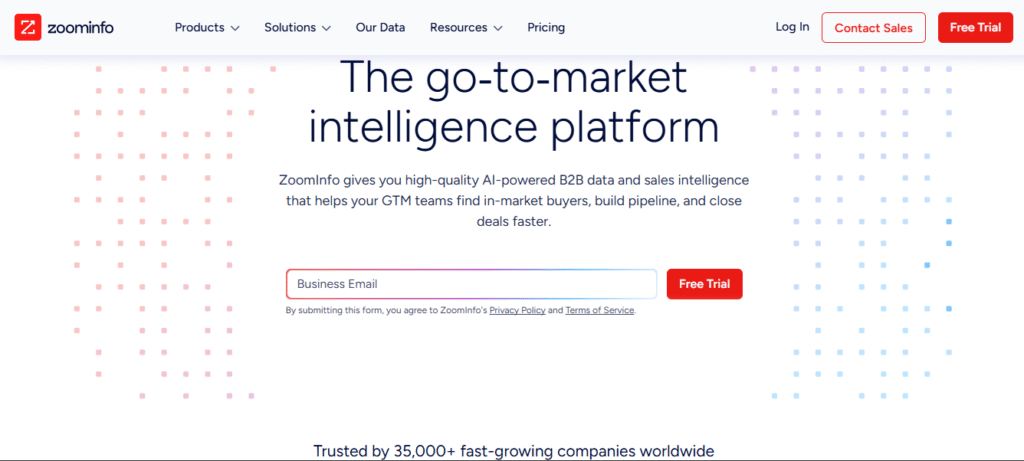
ZoomInfo is a business-to-business database and intelligence platform that provides organizations with detailed company and contact information.
The company was founded by Henry Schuck and Kirk Brown. Over the years, it has grown into a comprehensive operating system serving sales, marketing, operations, and talent acquisition teams across thousands of organizations.
Core Features:
The platform delivers verified B2B data including business emails, direct-dial phone numbers, accurate job titles, company technology stacks, and detailed firmographic information. ZoomInfo maintains industry-leading accuracy through continuous data validation using both automated systems and human verification processes.
Their proprietary data model combines multiple sources and verification methods. This approach helps them achieve up to 95% accuracy on first-party contact data, making it one of the most reliable platforms in the market.
What is ZoomInfo used for primarily? It helps B2B companies identify their ideal customers, connect with key decision-makers, and accelerate their sales cycles through data-driven prospecting.
Target Audience:
The platform serves businesses across all sizes. Small startups use it to build their initial customer base. Mid-market companies leverage it for account-based marketing. Enterprise organizations rely on it to power their entire go-to-market strategy and enrich existing CRM databases.
What is ZoomInfo Used For?
Understanding what ZoomInfo is used for helps you determine if it fits your needs. Here are the primary use cases:
Lead Generation and Prospecting:
I use ZoomInfo to build highly targeted lead lists based on specific criteria. You can filter by company size, annual revenue, industry, technology stack, job titles, and even employee growth trends. The advanced search capabilities help me find exactly the prospects I need without wasting time on unqualified leads. This is especially powerful when combined with modern lead generation tools that automate prospect discovery and qualification.
Contact and Company Intelligence:
The platform provides comprehensive access to decision-makers, organizational charts, and reporting structures. You get real-time insights about company changes, funding rounds, and leadership transitions. This intelligence helps personalize outreach, boost response rates, and move deals forward faster. Using smart email personalization tools alongside ZoomInfo makes it even easier to craft highly relevant messages at scale.
Sales Acceleration:
What is ZoomInfo used for in daily sales operations? It automates time-consuming tasks like lead enrichment, data cleansing, contact verification, and initial email outreach. This automation frees up your sales team to focus on high-value activities like closing deals and building relationships.
Market Research and Analysis:
Sales teams use the platform to understand market trends, research competitors, identify emerging opportunities, and analyze target markets. The comprehensive company database helps you understand industry dynamics and competitive landscapes.
Intent Data and Buyer Signals:
ZoomInfo tracks buying signals across multiple channels. This includes monitoring regulatory filings, tracking real-time organizational chart changes, capturing executive job moves, analyzing website visitor activity, and following relevant media appearances. These signals help you reach prospects at the perfect moment.
CRM Integration:
The platform seamlessly syncs with popular CRM systems like Salesforce, HubSpot, Microsoft Dynamics, and Pipedrive. Automatic data enrichment ensures your database stays accurate and updated without manual effort.
ZoomInfo Pricing in 2026
ZoomInfo pricing isn’t publicly available on their website. They require you to contact sales for a custom quote, which can be frustrating when budgeting.
However, industry research reveals the following pricing structure:
Pricing Tiers:
The Professional Plan starts at $14,995 annually and includes 5,000 annual bulk credits. This tier works for small teams just getting started with sales intelligence.
The Advanced Plan costs $24,995 per year with 10,000 annual bulk credits. Mid-market teams typically choose this option for expanded access and features.
The Elite Plan runs $39,995 annually and includes 10,000 annual bulk credits plus 1,000 monthly credits per user. Enterprise organizations with large sales teams benefit most from this tier.
What Influences ZoomInfo Pricing?
Several factors affect your final cost:
Number of Users: Each additional user costs between $1,500 and $2,500 depending on your chosen plan tier. This can add up quickly for larger teams.
Credit Usage: Every contact export consumes credits from your allocation. Bulk credit prices decrease with volume purchases. Prices start at $0.60 per credit for 5,000 credits and drop to $0.20 per credit when purchasing over 2.5 million credits.
Premium Features: Advanced capabilities like Intent Data, FormComplete, InboxAI, and Conversation Intelligence require additional fees on top of base pricing.
Contract Terms: ZoomInfo requires annual contracts with no monthly payment flexibility. They also include automatic renewal clauses that can increase prices by 10-20% at renewal time.
Hidden Costs to Watch:
Be aware of credit overage fees if you exceed your allocated credits. Many customers report unexpected costs when their usage exceeds initial estimates. Always negotiate overage rates upfront and monitor your credit consumption carefully. Another common hidden risk is poor deliverability, which is why many teams rely on email warmup tools before launching cold campaigns.
Is ZoomInfo Worth It?
Is ZoomInfo worth it for your business? The answer depends on your specific situation, budget, and growth stage.
Advantages:
The platform offers industry-leading data accuracy consistently above 95%. You get access to a massive database containing 260 million verified contacts. Real-time data updates ensure information stays current and reliable.
ZoomInfo provides seamless integrations with major CRM platforms and sales tools. Their AI-powered insights help identify the best prospects and optimal contact timing. When paired with the best cold email software, this data can significantly increase reply and booking rates. The intent data feature reveals which companies are actively researching solutions in your category.
Disadvantages:
The high annual cost starting at $14,995 creates a significant barrier for smaller businesses. ZoomInfo offers no monthly payment options, requiring full annual commitment upfront.
The credit-based system can be confusing and hard to predict. Automatic renewal clauses with price increases catch many customers by surprise. Small businesses and startups often find the investment difficult to justify compared to more affordable alternatives.
ROI Considerations:
Real-world results vary significantly by company size and usage. One enterprise customer reported that their 25 SDRs used ZoomInfo at $87,000 per year. This investment helped them source $4.2 million in pipeline annually, achieving an impressive ROI of 4,729%.
However, this level of return requires proper training, consistent usage, and enterprise-level deal sizes. Smaller organizations with lower average contract values may struggle to achieve similar returns.
Who Benefits Most:
Is ZoomInfo worth it for your team? Large enterprises with 20 or more sales representatives see the most value. Companies with dedicated sales operations teams that can maximize platform features justify the investment more easily.
Organizations with annual sales tool budgets exceeding $50,000 can absorb the cost more comfortably. Businesses selling complex, high-ticket products or services ($50,000+ average deal size) benefit from the superior data accuracy.
When It’s Not Suitable:
Small startups with fewer than 5 salespeople rarely maximize the platform’s capabilities. Solo SDRs and small teams often find better value in more affordable alternatives.
Companies with tight annual budgets under $20,000 should explore ZoomInfo alternatives first. Businesses targeting small local markets may not need the extensive database that ZoomInfo provides.
The platform excels when you need comprehensive data coverage and can fully utilize advanced features. But if you only need basic contact information for straightforward prospecting, more affordable competitors might serve you better.
ZoomInfo Competitors
The B2B intelligence market offers several strong ZoomInfo competitors. Here’s how the top alternatives compare:
| Competitor | Starting Price | Database Size | Best For | Key Advantage |
|---|---|---|---|---|
| Apollo.io | $49/month | 275M contacts | Mid-market teams | Affordable with built-in sequences |
| LinkedIn Sales Navigator | $99/month | 900M+ professionals | Individual sellers | Direct LinkedIn access |
| Lusha | $39/month | 100M+ contacts | Small teams | Simple, user-friendly interface |
| Cognism | Custom pricing | 400M+ profiles | International teams | Strong European coverage |
| Seamless.AI | $147/month | 1B+ contacts | Real-time needs | Live data verification |
Apollo.io delivers similar B2B contact data with integrated email sequencing at a fraction of ZoomInfo’s cost, which I break down in detail in my full Apollo.io review. The platform combines prospecting, outreach, and analytics in one tool. It’s perfect for growing teams that need an all-in-one solution without breaking the budget.
LinkedIn Sales Navigator gives you direct access to LinkedIn’s professional network. You can research prospects, track account updates, and engage through InMail messages. Individual sellers and teams already active on LinkedIn benefit most from this ZoomInfo competitor.
Lusha focuses on simplicity and ease of use. You get instant contact information through their browser extension and pay only for contacts you access. The straightforward pricing and intuitive interface make it ideal for small teams new to sales intelligence tools.
Cognism excels at providing GDPR-compliant European contact data. It’s a strong ZoomInfo competitor for international businesses operating across multiple regions. Their phone-verified mobile numbers set them apart in markets where direct dials are harder to obtain.
Seamless.AI provides real-time contact verification using artificial intelligence. Their engine updates contact information instantly as you search, ensuring you always get current data. This makes it valuable for teams that need the freshest possible information.
Each ZoomInfo competitor has unique strengths and ideal use cases. Your choice depends on your budget constraints, team size, geographic focus, and specific feature requirements.
Free ZoomInfo Alternatives
Looking for ZoomInfo competitors free of charge? Here are the best no-cost options:
| Tool | Free Plan Limits | Best Feature | Main Limitations |
|---|---|---|---|
| Hunter.io | 25 searches/month | Email finder & verifier | Limited monthly searches |
| RocketReach | 5 lookups/month | Personal email accuracy | Very restricted free tier |
| Snov.io | 50 credits/month | Email drip campaigns | Credits expire monthly |
| LinkedIn Basic | Free with limits | Professional networking | No contact export capability |
| Google Search | Unlimited | Manual research | Extremely time-consuming |
Hunter.io offers 25 free email searches each month. You can find and verify professional email addresses directly from company domain names. The email verification feature helps reduce bounce rates on cold outreach.
RocketReach provides 5 free contact lookups monthly. While very limited, it’s useful for occasional research when you need to verify a specific contact. The data accuracy on personal emails ranks among the best in the industry.
Snov.io gives you 50 monthly credits on their free plan. You can find emails, verify their validity, and even run basic email campaigns. However, unused credits expire at month-end, so you can’t accumulate them over time.
LinkedIn Basic Search lets you research professionals at no cost. You can view profiles, understand career histories, and identify potential prospects. However, you can’t bulk export contacts, and sending direct messages requires InMail credits available only with paid subscriptions.
Google and Manual Research remains completely free but incredibly time-consuming. You’ll spend hours manually finding contact information that paid ZoomInfo alternatives deliver instantly. This approach works for very small-scale prospecting but doesn’t scale.
Understanding the Limitations:
Free ZoomInfo alternatives and ZoomInfo competitors free versions have significant restrictions. Data accuracy typically drops compared to paid versions. Monthly limits severely constrain your prospecting volume and outreach capacity.
You lack advanced features like intent signals, buying triggers, and automatic CRM integrations. Customer support is minimal or nonexistent on free plans. Data freshness suffers as free tools update less frequently.
For occasional needs or testing purposes, these free options work adequately. However, serious B2B prospecting requires paid solutions that deliver consistent, accurate data at scale.
ZoomInfo vs Top Alternatives Comparison
Choosing between ZoomInfo alternatives requires understanding how they stack up head-to-head. Here’s my detailed comparison across key factors:
| Feature | ZoomInfo | Apollo.io | LinkedIn Sales Nav | Lusha | Cognism |
|---|---|---|---|---|---|
| Database Size | 260M contacts | 275M contacts | 900M+ profiles | 100M+ contacts | 400M+ profiles |
| Email Accuracy | 95%+ | 90-95% | 85-90% | 90%+ | 92%+ |
| Phone Numbers | Direct dial | Mobile & direct | Limited | Mobile focus | Direct dial |
| Starting Price | $14,995/year | $49/month | $99/month | $39/month | Custom quote |
| CRM Integration | Advanced | Native | Native | Basic | Advanced |
| Intent Data | Yes (paid add-on) | Basic included | No | No | Yes (included) |
| Chrome Extension | Yes | Yes | Yes | Yes | Yes |
| Email Sequences | No | Yes | InMail only | No | Limited |
| Free Trial | Demo only | 14 days | 30 days | 5 credits free | Demo only |
Feature Comparison Analysis:
ZoomInfo leads the market in data comprehensiveness and accuracy. Their 95%+ accuracy rate sets the industry standard. However, Apollo.io combines prospecting tools with outreach capabilities, creating a more complete solution for teams that need both functions.
LinkedIn Sales Navigator offers the largest database but focuses more on professional networking than direct contact information. Cognism stands out for international coverage, especially in Europe where GDPR compliance matters most.
Pricing Comparison Breakdown:
ZoomInfo alternatives like Apollo.io and Lusha cost approximately 95% less than ZoomInfo’s enterprise pricing. You get similar quality contact data for $49-$147 monthly compared to ZoomInfo’s $15,000+ annual commitment.
This dramatic price difference makes these alternatives attractive for smaller teams. However, the lower price often comes with reduced features, smaller credit allocations, or less comprehensive data coverage.
Data Quality Assessment:
ZoomInfo maintains the highest accuracy rate at 95%+ across their entire database. This superior accuracy reduces wasted outreach and improves conversion rates on cold campaigns.
However, ZoomInfo competitors like Cognism and Apollo.io deliver 90-95% accuracy, which satisfies most business requirements. For many teams, the 3-5% accuracy difference doesn’t justify paying 10x the price.
Best Value Recommendations:
For teams under 10 people, Apollo.io offers the best balance of features, accuracy, and affordability. You get prospecting tools, email sequences, and solid data quality at accessible prices.
Enterprise teams needing maximum data coverage, advanced intent signals, and dedicated support should evaluate ZoomInfo or Cognism. The higher investment makes sense when you’re managing large sales teams and high-value deals.
The right choice among ZoomInfo alternatives depends on your specific requirements, not just the lowest price. Consider your team size, average deal value, and which features you’ll actually use before deciding.
How to Choose Between ZoomInfo and Alternatives
Selecting between ZoomInfo and its competitors requires careful evaluation of your specific situation. Here’s my proven framework for making the right decision:
Primary Decision Factors:
Start by identifying your primary use case clearly. Do you need comprehensive company intelligence with org charts and intent data? Or do you just need basic contact information for straightforward outreach?
ZoomInfo excels at providing deep account insights, technology stack information, and buying signals. Simpler ZoomInfo alternatives work perfectly well for basic prospecting where you just need emails and phone numbers.
Budget Considerations:
Calculate your cost per qualified lead based on your current conversion rates. ZoomInfo at $15,000+ annually makes financial sense when you’re closing high-value enterprise deals with $50,000+ contract values.
But if you’re prospecting small-to-medium businesses with $5,000-$15,000 average deals, spending $49-$147 monthly on alternatives delivers much better ROI. The money saved can fund additional marketing channels or hire another team member.
I always recommend starting with a lower-cost option when you’re new to sales intelligence platforms. You can upgrade to ZoomInfo later if you outgrow the features or need more comprehensive data.
Team Size and Needs:
Solo sellers and teams under 5 people should explore ZoomInfo alternatives like Lusha or Apollo.io first. The simpler interfaces require less training time. Lower costs match your scale and won’t strain limited budgets.
Mid-market teams with 5-20 salespeople benefit from Apollo.io or Cognism. You get robust features without enterprise-level pricing. The platforms scale well as your team grows.
Enterprise organizations with 20+ users should seriously evaluate ZoomInfo. The advanced features, comprehensive intent data, and dedicated customer support justify the premium investment when operating at scale.
Data Accuracy Requirements:
If your average deal size exceeds $50,000, invest in ZoomInfo’s 95%+ accuracy rate. Wrong contact information at this level costs valuable time and damages your reputation with important prospects.
For smaller deals under $10,000, ZoomInfo competitors offering 90-92% accuracy provide sufficient quality at significantly lower costs. The slight accuracy trade-off makes sense given the dramatic price difference.
Consider your sales cycle length too. Longer enterprise sales cycles benefit more from highly accurate data since you’re investing months into each opportunity.
Conclusion
So what is ZoomInfo? It’s the most comprehensive B2B intelligence platform available today, offering unmatched data accuracy and depth across millions of contacts and companies.
I’ve shown you what ZoomInfo is used for, from lead generation to intent-based selling and account intelligence. The ZoomInfo pricing reflects its premium market positioning, starting at $14,995 annually with enterprise plans exceeding $40,000.
Is ZoomInfo worth it? For enterprise teams with substantial budgets and high average deal values, absolutely. The ROI potential speaks for itself when the platform is implemented properly and used consistently.
However, I’ve also shared strong ZoomInfo competitors and practical ZoomInfo alternatives that deliver excellent value at accessible price points. Apollo.io, Lusha, Cognism, and others provide quality B2B data without requiring massive upfront investments.
Try free ZoomInfo
My Final Recommendation:
Match your sales intelligence tool to your current business stage and realistic budget. Start with affordable ZoomInfo alternatives if you’re building your sales operation or testing the category.
Upgrade to ZoomInfo when you’ve proven the ROI with cheaper tools, expanded your team beyond 15-20 people, and have the budget to invest in premium features and superior data accuracy.
Take Action Now:
Evaluate your specific prospecting needs honestly. Calculate your cost per lead with current methods. Then choose the platform that will accelerate your sales growth without breaking your budget.
The right B2B data tool transforms your pipeline from a guessing game into a predictable revenue engine. Start researching your options today and request demos from at least three providers before making your final decision.
FAQ
What exactly does ZoomInfo do?
ZoomInfo provides comprehensive B2B contact and company data to help sales and marketing teams find and connect with ideal prospects. It offers verified business emails, direct-dial phone numbers, detailed company insights, organizational charts, and intent signals that reveal buying behavior. Teams use it to build targeted lead lists, enrich existing CRM data, and identify high-value opportunities at the perfect moment.
How does ZoomInfo get my information?
ZoomInfo collects information from publicly available sources across the internet. This includes company websites, press releases, SEC filings, social media profiles, professional publications, and business directories. They use advanced web crawling technology combined with third-party data partnerships. The platform continuously validates and updates information through both automated systems and manual verification processes to maintain high accuracy levels.
Can I use ZoomInfo for free?
No, ZoomInfo doesn’t offer any free plan or trial period. They only provide demo access through their sales team. If you need free options, consider ZoomInfo alternatives like Hunter.io (25 searches monthly), RocketReach (5 lookups monthly), or Snov.io (50 credits monthly). LinkedIn’s basic search also works for manual prospecting without any cost.
What’s the difference between ZoomInfo and LinkedIn Sales Navigator?
ZoomInfo focuses on providing verified contact data including direct emails and phone numbers with 95%+ accuracy. LinkedIn Sales Navigator excels at professional networking, relationship building, and InMail outreach within LinkedIn’s ecosystem. ZoomInfo offers 260M contacts starting at $14,995 per year. Sales Navigator provides access to 900M+ professional profiles at $99 monthly but with limited direct contact information available for export.
How much does ZoomInfo actually cost?
ZoomInfo pricing starts at $14,995 annually for the Professional Plan with 5,000 credits. The Advanced Plan costs $24,995 per year with 10,000 credits. The Elite Plan runs $39,995 annually. Additional users cost $1,500-$2,500 each. Premium features like Intent Data and AI tools require extra fees. Most companies end up spending $20,000-$50,000 annually when factoring in all costs.
What are the best cheap alternatives to ZoomInfo?
Apollo.io ($49/month) offers the best value with 275M contacts plus built-in email sequences. Lusha ($39/month) provides simple access to 100M+ contacts with a user-friendly interface. Cognism offers custom pricing with strong European coverage. For free options, try Hunter.io (25 searches monthly) or Snov.io (50 credits monthly). These ZoomInfo alternatives deliver 90-95% accuracy at fraction of the cost.